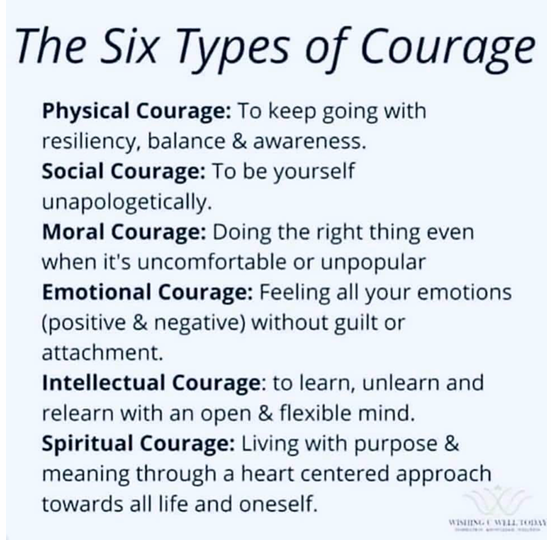
Improvise
Adapt
Overcome
Table of Contents
Thoughts on 80
Introduction
I started a story in 2019 titled “Yep, That’s Me” to tell my grandkids and great-grandkids how I evolved into the person I am today. As my business card says, “I am a work in progress Christian and writer of stories. I’ve always been, and I’m still, a work-in-progress Christian. More thoughts on that later. I started writing stories after my wife, Grandma
Maxine, died in 2005. I have written many stories about the spiritual events in my life. Those stories and my other stories are stored on my website: garystrattonfirefighter.com.
My hope is that my kids, grandkids, and great-grandkids all get a chance to write their thoughts on turning 80 because, as we know, not everyone has gotten that chance.
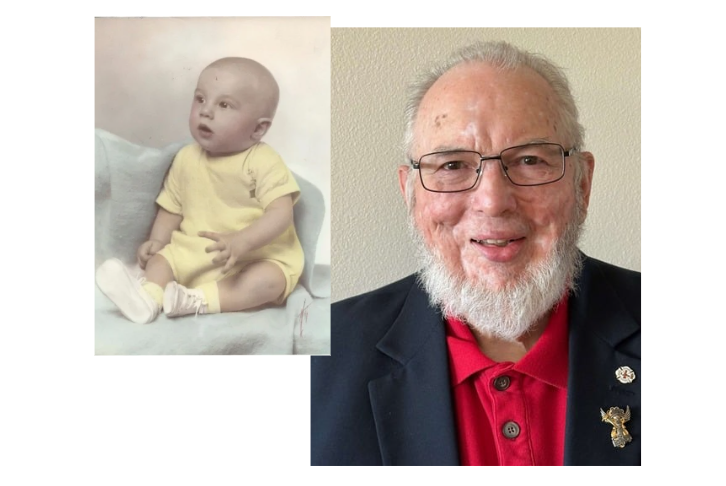
I was born on April 24, 1944. My mom and dad lived on a farm in Milford Township, northwest of Nevada, Iowa. My dad (Galen, nicknamed Fritz) farmed with his dad (Glen
and mom (Rose, known affectionately as Grum) on a farm my grandpa rented. My mom (Lois) and dad were married in March of 1943. In October of 1943, my grandpa died from
cancer. The draft board deferred my Dad from the WW II draft so he could run the farm and take care of his mother and two sisters because his brother, Art, was already deployed to
England preparing for the invasion. In the fall of 1944, the landlord told my dad he had to move as the landlord was moving his son-in-law onto the farm in the spring of 1945. So in
late December, my dad moved the livestock, grain, and family to a rented farm one mile west of Nevada, Iowa, on old Highway 30 (think of it as the interstate from Chicago to Denver back in those days). I was 8 months old when we moved to that farm. So, I grew up and lived on that farm until Maxine and I got married in June of 1965. 1981 was Dad’s last crop year, and he retired from that farm in January 1982.
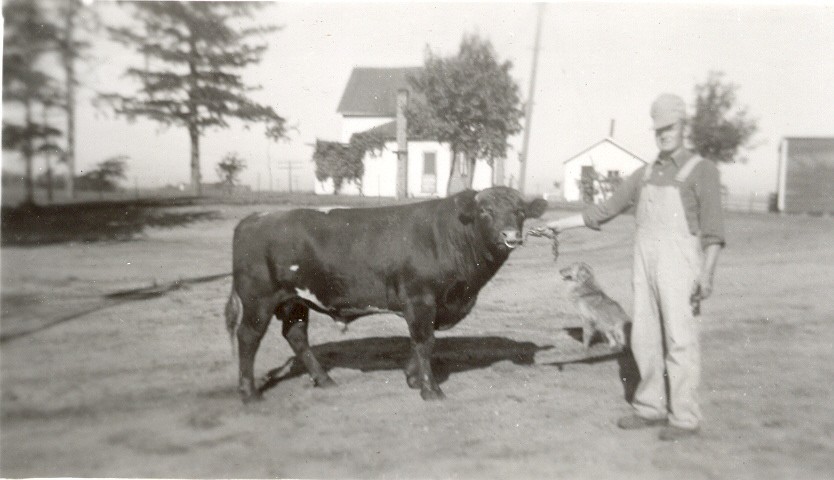

That farm had a two-hole outhouse with one hole for kids and one hole for adults. There was no running water in the house. A hand pump in the kitchen sink pumped water from a cistern next to the house (you can google that for details on
cisterns and hand pumps). The two-story house was heated by the range stove in the kitchen and an oil burner heater in the dining room. Mom heated water on the range stove for washing dishes and for taking baths. The only heat upstairs was what worked its way up the stairwell to the upstairs bedrooms by convection (again, google all that). That means the upstairs was really cold in the winter; frost was often on the window glass and sometimes on the walls. There was also a root cellar for storage of glass jars that contained all the food mom canned during the summer. We also stored our potato crop in that cellar. The cellar was also our storm room. Mom and Dad would grab my brother and me out of our beds, run outside, open the cellar door, and get us to safety during bad storms.
In the winter of 1951, the landlord built a modern three-bedroom house on the farm. In the spring of 1952, when I was eight years old, we moved into a house with indoor plumbing, running water, a hot air furnace, carpet on the floor, and a basement we could play in during the winter. It was luxury.
When I was growing up, we didn’t have many books in the house. However, I had a few childrens books and my mother read then to me. I went to a small country school for K-6th
grade. There were about 12 kids in my class. I went to town school starting in the seventh grade and I discovered the public library. It was a neat building, built in 1900 via a $3000
memorial gift from the R.J. Silliman estate. The building served until 1990, when it was torn down and replaced with a new building. It was in this library that I discovered the world
outside of Nevada, Grant Township, and Story County, Iowa. This was exciting to me but the knowledge I could garner from this library pales in comparison to the knowledge my
grandchildren and great-grandchildren can acquire from the internet. My favorite books were stories about the mountain men and explorers who discovered and conquered the
American West. Their stories about going into the unknown and overcoming adversity fascinated me.
In 1952, at the age of 8, I was given the book “Robinson Crusoe”. I loved that book and read that book many times. I still have that tattered and torn book in my office library. From
these beginnings, I became a reader of non-fiction, always looking to learn new things and new skills. After high school, I read a lot of biography books. I liked science, math, and
invention. I read books about Thomas Edison, Albert Einstein, Charles Goodyear, Henry Firestone, Henry Ford, Winston Churchill, and George Patton. Books about people who
overcame great odds and hardships to achieve success inspired me and taught me lessons. All these people had similar personality characteristics. They were persistent, they
learned from their mistakes (of which there were many). They were not afraid of failure, and they had a clear vision of their goal. I also watched a lot of movies and TV programs about
the heroics of the soldiers of WWII and learned about the courage and fortitude it took to accomplish the missions they were assigned. Their actions helped instill into me the desire
to not give up when the going gets tough. Their actons also instilled in me that sometimes the good for others is more important than your personal good, or to quote Mr. Spock of Star Trek, “The Needs Of The Many Outweigh The Needs Of The Few, Or The One.”
That’s how my early life was, so now onto thoughts on turning 80.
Christianity
For me, the beginning of the Christian journey is baptism. I believe it is important to be baptized. Since the beginning of time, there has been a debate about whether baptism
should occur as an infant or as an adult. My preference is infant baptism. You never know what will happen, and I believe being cradled in the hand of God at an early age is best. I
believe there is nothing to lose and everything to gain by being baptized as an infant. However, if you weren’t baptized as an infant, you can accomplish that at any time.
Being a Christian is, by necessity, a lifelong journey. Early in life, grab the basics and add to your understanding through life’s journey. Being a Christian is not sitting in a church pew
every Sunday. Sitting in a church pew every Sunday doesn’t make you a Christian any more than swimming in a lake makes you a fish (that statement is an old churchism). Being a Christian is about having faith in God and how you live your life and how you treat others.
The basics of being a Christian are to believe in God, follow the two great commandments, and do good to others. The two great commandments are: “Love the Lord God with all your
soul and mind. This is the first and greatest commandment, and the second is like it: Love your neighbor as yourself. (Reference: Matthew 22: 36-40 NIV )
Basically, to be a Christian, you need to believe and have faith in God and grow to be a servant to others, which, in my opinion, was best summarized by John Wesley
(1703-1791), founder of the Methodist Church.
Do all the good you can,
By all the means you can,
In all the ways you can,
In all the places you can,
At all the times you can,
To all the people you can,
As long as you ever can.
It is debatable if President Jimmy Carter was a good president, but he was an exemplary example of a great Christian. Google the life he and his wife lived and notice their strong faith and all the things they did after he was president. In history, very few couples can match them.
I got the basics from the Memorial Lutheran Church in Nevada, IA (an American Lutheran Church denomination) while I was growing up. Shortly after Maxine and I got married, the Stratton family had a falling out with that church, and I dropped out of attending church for about ten years. When Maxine and I moved to Hudson in 1974, a friend invited us to attend
an ELCA Lutheran Church. Maxine had an unfailing belief in God and said it was time to get the kids into Sunday school (never underestimate the benefit of a strong Christian
woman in your life. Maxine was a great mentor to me). I picked up the pieces of the past and re-engaged on the lifelong journey that I’m still on today. Maxine and I attended the St.
Timothy Lutheran Church for more than thirty years.
When I moved to Missouri in 2010 I joined the Methodist church, the church my mother’s family attended, and embraced their doctrine. The mainline churches have made Christianity way more complicated and confusing than it needs to be. Don’t let them discourage you. Start with the basics and begin your journey. A good way to start is to get a Bible and read the New Testament, the Proverbs, and the Psalms in that order, then apply the basics. The Old Testament is a history lesson and is about what not to do. What not to do is not an action item. The New Testament requires an action to do something, and that
something is to love others, and that is an action item.
When I moved to Missouri in 2010 I joined the Methodist church, the church my mother’s family attended, and embraced their doctrine. The mainline churches have made Christianity way more complicated and confusing than it needs to be. Don’t let them discourage you. Start with the basics and begin your journey. A good way to start is to get a Bible and read the New Testament, the Proverbs, and the Psalms in that order, then apply the basics. The Old Testament is a history lesson and is about what not to do. What not to do is not an action item. The New Testament requires an action to do something, and that
something is to love others, and that is an action item.
I’ve had my ins and outs with the church, but I’ve worked for the last 50 years to be a better and more knowledgeable Christian, and I’m still doing that work. I encourage you to begin
or continue your journey because it is a lifelong adventure that builds your character until the day you die.
Taking time to enjoy the beauty God has placed on this earth is one of the important parts of Christianity to imbed in your lifestyle. Today, you can even do it with Google. When I was
in high school, traveling to the mountains or the ocean was not a possibility. The transportation systems did not exist, nor did the finances exist. Later in life, my job took me to many parts of the USA. God’s beauty was everywhere I went but I was so busy and entranced with my job I didn’t take time to look at it. When I was forty-nine years old, a co-worker did an intervention on me to rescue me from my workaholism. A big part of the intervention was to take time to see and appreciate God’s beauty on this earth. I had never been to a national park. Because of my work travel schedule, I saw four national parks andGod’s beauty in the next twelve months. So don’t be like me; don’t wait until your forty-ninth birthday to make seeing God’s beauty on the earth part of your lifestyle. That beauty is in the everyday stuff of life, to the mountains, to the oceans, to the sky, or to outer space. Make time to look at it, see it, and appreciate it.
Learning from our ancestors and others who came before us is also part of Christianity. The
best example I know of was Grandma Maxine. When she passed away from cancer, many people compared her life to the prayer of St. Francis of Assisi, and that was true. The prayer of St. Francis is:
Prayer of St. Francis of Assisi (Prayer for Peace)
Lord, make me an instrument of your peace:
where there is hatred, let me sow love;
where there is injury, pardon;
where there is doubt, faith;
where there is despair, hope;
where there is darkness, light;
where there is sadness, joy.
O divine Master, grant that I may not so much seek
to be consoled as to console,
to be understood as to understand,
to be loved as to love.
For it is in giving that we receive,
it is in pardoning that we are pardoned,
and it is in dying that we are born to eternal life.
The world would be a better place if more of us lived that prayer like Maxine did.
Another part of life for me and Maxine was the Jaycee Creed.
We Believe:
That faith in God gives meaning and purpose to human life;
That the brotherhood of man transcends the sovereignty of nations;
That economic justice can best be won by free men through free enterprise;
That government should be of laws rather than of men;
That earth’s great treasure lies in human personality;
And that service to humanity is the best work of life.
The two most important lines were the first and the last. Both lines supported the Christian life we tried to live. At some point, someone will inherit the Jaycee ring Maxine gave me
when I met the age limit and retired (required at age 37) from the Jaycees. I request they try to uphold the two inscriptions: Faith in God and Service to Humanity.
I have found comfort in some of the church hymns. In the hymns, pay attention to the lyrics, not the music. Lutherans especially, but also other denominations, have some great lyrics,
but the music is just horrid (the Methodists have the best music). As you read the Bible, note the verses in Proverbs, Psalms, and the New Testament that are meaningful to you. Jot them down and refer to them often.
One of the things I carry around in my Franklin Planner is a prayer from the St. Norbert College Prayer Book, page 39.
The Road Ahead
My Lord God
I have no idea where I am going.
I do not see the road ahead of me.
I cannot be certain where it will end.
Nor do I really know myself, and the fact that I think that I am following your will does not
mean I am actually doing so.
But I believe that the desire to please You does in fact please You and I hope I have that
desire in all that I am doing.
I hope that I will never do anything apart from that desire, and I know if I do this, you will
lead me by the right road though I may know nothing about it.
Therefore, I will trust You always though I may seem to be lost and in the shadow of death,
I will not fear, for You are with me, and You will never leave me to face perils alone.
In the journey of life, God gives you gifts. However, you might not recognize the gifts until years later. After high school, I worked in a gas station and learned how to repair tractor,
car, and truck tires and how to unmount and remount them. Fifteen years later, I was working on tractor tires for John Deere. I used the knowledge to help me in that job, and one time, I had to actually change a tire on a farm in NE Wisconsin because the young employee of the tire service didn’t know how to do it. Everything you experience in life is an experience to help you in some type of future experience. These experiences are not
accidents, they are gifts from God. The same goes for people who cross your path in life’s journey. Some are good examples, some are bad examples, some you never know their
name, and some you can never forget.
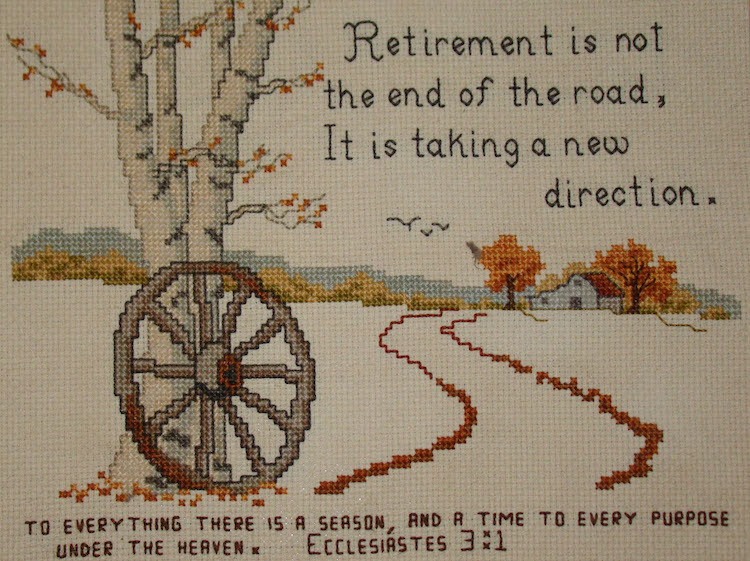
Ecclesiastes 3: 1-14 has always been a favorite of mine. It became especially important after Kim’s death. I found it to be a good reference when you don’t understand why things happen in life. It helped me appreciate the time I had with Kim instead of floundering in the loss and dealing with the agonizing questions of what might have been as those emotion tried to overtake my life and turn me into despair. I also turned to those verses after
Maxine’s death.
Knowing and understanding the terms good, bad, and evil is also important. It is important to know the difference in those terms and how it affects the life and character of you and
others. It is essential that evil be dealt with and eliminated at all costs. Evil will not disappear by disregarding it or looking the other way.
Wisdom
In 1984, when I turned forty, I said, “I’ve got all this knowledge; when is this wisdom part going to come”? In the next decade, a lot of wisdom came to me.
Adversity brings knowledge and knowledge wisdom. – Welsh proverb
An old sage instrumentation technician at John Deere said to me early in my test engineer job, “Kid (I was age 43), stick to the basics; you’re not smart enough to make advanced mistakes.” That was wisdom I took to heart, and it served me well in my career. Doing the basics and keeping them documented will pay dividends when future questions/problems arise.
After I graduated from the Technical Institute at Iowa State University, I collected prose and one-liner pieces of wisdom. Many of them served me well and are documented on my
website, garystrattonfirefighter.com, as “Stratton’s Advice.” When my kids were in high school, I printed them out and gave the advice to them as Christmas presents.
When I was young, a bit of wisdom came to me: Learn from others’ mistakes because you won’t live long enough to make all of them yourself.
A lot of wisdom comes from people who cross your path in life’s journey. Those people cross your path because God guided them to you. I didn’t know that early in my life, but after eighty years, I know what I’m writing about.
Discernment leads to wisdom
Discernment is mentioned in the Bible but seldom taught or discussed in churches or public schools. The hardest part is learning how to be good at discernment, and that includes listening to God’s guidance, ie: the Holy Spirit working in your life. This effort is also a lifelong activity. (hint: if your current path is difficult, maybe you are on the wrong path, pray and listen. Sometimes, the Holy Spirit had to come back to me multiple times before I listened and the pieces of the puzzle came together.
From the dictionary.
discernment | dəˈsərnm(ə)nt |
noun
1. the ability to judge well: an astonishing lack of discernment.
2. (in Christian contexts) perception in the absence of judgment with a view to obtaining spiritual guidance and understanding: without providing for a time of healing and discernment, there will be no hope of living through this present moment without a shattering of our common life.
What does the Bible say about discernment? In a Biblical context, discernment generally refers to the ability to judge well, to recognize and follow God’s will, or to distinguish
between what is morally and spiritually right or wrong according to God’s teachings. It is seen as a virtue and a wisdom that goes beyond simple perception or superficial judgment.
Discernment in the Bible is often associated with wisdom, understanding, and insight, and it is considered a gift of the Holy Spirit.
Moral Judgement: Discernment involves the ability to make moral judgments based on God’s standards as outlined in the Bible. This could involve distinguishing between good
and evil, right and wrong.
Decision Making: Discernment helps individuals in making wise decisions according to God’s will. This wisdom comes from reflecting on God’s word and seeking His guidance in prayer. (An old adage on decision-making is: Don’t make a decision until you have to, but when you have to make a decision, make it.)
Spiritual Insight: In the New Testament, Christians are encouraged to “test the spirits” to see whether they are from God (1 John 4:1). This means evaluating whether teachings,
prophecies, or spiritual phenomena align with the truth of the Gospel and the character of God as revealed in the Bible.
The Bible verses below can help you understand the different aspects of discernment.
| Bible verses on discernment | ||
|---|---|---|
| Proverbs 2:1-5 | Philippians 1:9-10 | 1 KINGS 3:9 |
| Proverbs 3:1-6 | James 1:5 | 1 Samuel 16:7 |
| Proverbs 15:14 | Psalms 119:125 | 1 Thessalonians 5:21 |
| Proverbs 15:2 | Romans 12:2 | 1 Timothy 4:1 |
| Proverbs 18:15 | 1 Corinthians 2:14, 12:10, 14:29, 14:23 | Colossians 2:8 |
| Proverbs 28:11 | 1 John 2:27, 4:1 | Hebrews 4:12, 5:14 |
| Hosea 14:9 | John 7:24 | Matthew 10:16, 24:24 |
| Acts 17:10-11 | 1 Timothy 6:3-5 | 2 Corinthians 11:13-15 |
Your senses are also a big part of discernment, and you need to train and empower them. Sight, sound, and smell are the most important. Ask any farmer, police officer, or firefighter,
and they will tell you. Most people look and hear, but fewer see and listen. Seeing and listening are key skills for discernment. Photographers are a prime example. Most people
look through the viewfinder, but skilled photographers see what’s in the viewfinder. Skilled photographers see all the details, the little things, the shadows, the reflections, the tilt of the
head, the piece of lint on the collar of a jacket, etc. Listening to a farm tractor working hard or a fire engine pumping will tell you a lot about how well it is working. Sight, sound, and smell are vital in determining if livestock or pets are healthy and calm.
Discernment is vital to people who work in engineering, photography, and other professions. We look at the same things as others, but we see things, hear things, and smell things in greater detail, and those details can be of great importance to the situation. That is how skilled engineers make better judgments, and skilled photographers compose better pictures than those who just look. An above-average ability to discern is a vital skill to achieving success. (Remember: Average is just as close to the bottom as it is to the top.) Work and study to be above average.
In today’s world, using good discernment via sight, sound, and smell will assist you in making split-second decisions when unexpected events can mean life or death and instant
decisions about your response are required. Improving discernment via your senses is a lifelong project. Every firefighter and police officer has this as part of their skill set.
Other references: https://www.biblestudytools.com/topical-verses/bible-verses-about-discernment/
Also see https://www.joincake.com/blog/quotations-about-decision-making/
Your Career (or Career choices)
Know the difference between a job and a career.
A job is a work that usually requires you to do one thing, often repeatedly, and will seldom change over time. The job offers little opportunity for advancement or increases in pay and requires minimal effort to improve your skills. A career is a job that offers the opportunity to increase your duties and pay. That career also demands effort from you to improve your skills and increase your catalog of skill sets. Development of your skills and skill sets is mandatory if you want to advance in a career.
Knowing what you don’t want to do is just as important as knowing what you want to do. Sometimes, knowing what you don’t want to do happens before you get to the “I want to do
this” part. I only knew farming until junior high. In junior high I discovered math and science beyond basic arithmetic and the weather (guessing what tomorrow would be by the sun,
wind, clouds, and moon…no satellite data back in those days). There is a vast world to explore. Don’t limit yourself to your current environment.
Career choices: The old rule is to look for a job or career that involves the three basics of life: food, fiber, and shelter. These jobs tend to have fewer / less severe up-and-down
cycles and layoffs. I chose Deere because they manufactured equipment that covered all three basics of life and offered me $15 more per month than Proctor and Gamble in Cincinnati, OH. (My starting salary at Deere in 1965 was $465/month, and that was 1.75 times what I made at my job before going to the two-year tech school at ISU)
Basic skills: My Dad had bad memories of the massive number of people who were out of work, unemployed, or had their farms foreclosed during the Depression of the 1930s. His philosophy for Gale and me was that if we could run a pitchfork, broom, and shovel, we would never be unemployed. To give us an edge, he required that we learn to be ambidextrous with all three tools, and he gave us lots of practice. In those days, 90% of the
jobs required manual labor, and jobs involving pitchforks, brooms, and shovels were plentiful. At the age of 80, I still have and still use those basic skills. You should work to
acquire the basic skills of your generation, which in 2024 involves computer skills, communication skills, and the ability to think (discernment).
Obtaining skills after high school is a must in 2024. Apprenticeships in the trades (electrical, plumbing, construction equipment, etc.), two-year technical schools, or a bachelor’s degree at a college or university are necessary first steps. This step does not guarantee you a job, but with an above-average grade point, it should get you an interview, at which time you need to demonstrate that you have the basic skills and can use those skills to advance the goals of the company wanting to hire you. When you get hired it is up to you to demonstrate the company made the right choice and that your skills and work ethic convince them to keep you employed.
There are no free lunches (Google that if you’re not familiar with that saying). Your certificate hanging on the wall doesn’t entitle you to a free lunch. It takes hard work to get in
the door and even more hard work to keep yourself employed. Endeavor to persevere (Google that if not familiar and burn it into your brain). (Remember my philosophy:
Improvise, Adapt, Overcome)
Work Ethic
Show up for work every day. Work hard (do your best all day, every day, plus extra time/days if needed). This is what 80% of the Mexicans do—that’s why they are high on the preference list for new employees. Books have been written about the degradation of the American work ethic between the 1950s and the 2020s. For an old man like me, it’s sad and a disgrace to the American way of life. The 80/20 rule applies to all aspects of life and job skills. EMTs do 80% of what a paramedic does, paramedics do 80% of what an ER doctor does, LPN nurses do 80% of what an RN nurse does. A tech school engineer with
an AAS degree does 80% of what an engineer with a BA degree does, and they do 80% of what a Masters degree does. The same is true for firefighters from rookie up to chief. Each rung of the ladder requires more mental skills and expertise, and each rung up the ladder allows some practical skills to be delegated to others. The last person you want doing CPR is a doctor; get a nurse or EMT. In your journey, try not to lose your practical skills; the world is full of highly educated people who can’t fix or do basic repairs in their homes, like opening the garage door if the electricity goes out and the door opener won’t work.
Work ethic includes perpetually learning and mastering the mental and physical skills of new technology…especially today when 50% of your technical knowledge will be obsolete
in five years.
Up until the 1930s, farming had been basically the same for several hundred years: animal
power and human physical labor. The skill level changed very little. Work was all about strength and stamina. With the advent of an affordable internal combustion engine,
mechanical power began to replace oxen, horses, and mules, and that transition
accelerated after WW II.
In the 1920s and 30s, my dad, his brother, and both his parents picked corn by hand (grandma could pick more than any of the men). They tossed the corn into a wagon pulled by horses. Then they scooped the corn from the wagon into the corn crib, then scooped it back out to grind into hog and cattle feed, and scooped it into the cattle bunks and the hog and sheep feeders. Today, corn is picked and shelled by a combine, augured into wagons and bins, augured out to semi-trucks to haul to processing plants. From the field to the final product, corn and other commodities are practically untouched by manual labor. When I was born, my dad farmed with horses and one tractor. He planted corn and beans with horses because the horses could plant a straighter row than the tractor. In 1960, we had three tractors, each pulling a three-bottom plow (3-14’s, they were called). We went to the field in the fall and spring, pulling nine bottoms across the field—that was a really big deal in those days. We were tilling ten and a half feet each pass across the field. Tillage practices have changed, and moldboard plows have been replaced by chisel plows and field cultivators. Today, one tractor can till 30 to 40 feet each pass across the field. Farms are fewer, and farm equipment is much bigger, but the amount of land farmed is almost the same. However, Mother Nature still gives you the same four to six weeks in the spring and again in the fall to do all the work. At age 10, I learned how to drive a straight line by focusing my line of sight on a fence post on the other side of the field. After a couple of years, I was pretty good at it with few crooked spots. When I retired from John Deere, I just sat in the tractor, hands off the steering wheel, and let a satellite drive the tractor across the field in a perfectly straight line. Remember that all the food you eat depends on six inches of topsoil, rain, and a farmer to get that work done in the time Mother Nature allows.
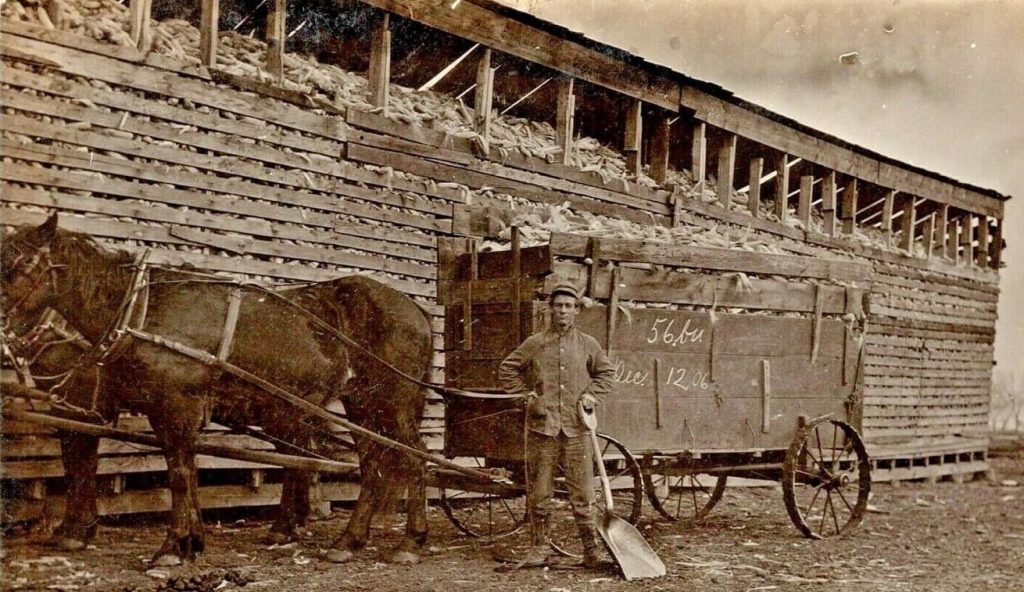
Many of the skills I learned on the farm and in my career are now obsolete. Remember to upgrade your skills with changing times. Your work ethic has to be tuned to your ever changing field of work. The days of strength and stamina have been replaced by mental skills and technology skills. The skills to keep a job or career will be different next year. Plan to learn so you don’t get left behind.
My dad aspired to achieve perfection in his farming practices and instilled that into me and my brother. Perfection or effort to be perfect is a blessing and a curse—as are other things in life. Moderation in all things is a virtue, and moderation in my work effort was hard for me to achieve in adult life. You must work to create a balance of career work/time and family work/time. Fortunately, a co-worker did an intervention when I was forty-nine that helped me get a better balance.
I was a full-fledged card-carrying workaholic. I was literally working myself to death. I was gone from home one to three months at a time on test work and working 60-70 hours a week. ERP intervened and put me in her 13-step recovery plan. She asked me if I had ever been to a national park, and I said no. Her response was that Deere sent me all over the country to do test work and that I should take time to visit national parks and see the beauty God placed on this earth. I promised to take Sundays off during my test work. Well, the second time out, I got busted when she called the test site on Sunday, and I answered. I had been expecting a call from Maxine. I repented and took Sundays off. Maxine and I also talked about my workaholism. I promised not to bring JD work home during the week, to limit extra hours at the office during the week to the M – F time frame, and not to work weekends at the office. Life between Maxine and I got better, and my health improved. In the next twelve months, I visited four national parks and spent my Sundays being out an about, seeing the beauty God put on this earth. I have reached age eighty because ERP intervened. Don’t become a workaholic.
Be patient in your career—36 years at Deere, 4 promotions, Grade 4 to Grade 8, that was an exceptional career for a tech school graduate. Always work to improve your skills, but more importantly, the quality of your work—even though you may have the same job a little longer than you would like, improving the quality and quantity of your work is an important part of a career. It might help you keep your job when times get tough. In 1979, John Deere Waterloo had about sixteen thousand employees. In 1985, fewer than five thousand employees. Wages were frozen, promotions were frozen, benefits were lost, and for the first time ever, salaried employees had pay deductions taken out for health care insurance. I was fortunate to keep my job. I would like to think my work ethic, quality, and quantity
were part of that decision.
Enhancing your vocabulary in school will help you throughout your life. I only knew farming vocabulary, and it limited me when I graduated from tech school at ISU. Expand your vocabulary beyond your growing-up environment and beyond your current area of interest.
Listen to the wisdom of your ancestors. Hard work pays off; some years are easy, some years are hard, and there will be terrible years. Life on the farm varied; in some years, grain and livestock prices were high, and in other years, prices were low. Occasionally, there were terrible years like the drought of 1956 when the corn crop was a total loss by August, and life in 1957 was very austere. A historical rule of thumb in farming was to plan on a bad year every seven years. Most farmers followed that and budgeted their income to be able to survive a bad year. Many people other than farmers followed that philosophy because, in that time period, credit cards did not exist. Every purchase was “money on the barrel head,” as they called it in the “old days.” Everything was paid for in cash. You saved up the money and then purchased it and paid for it. The advent of credit cards in the 1970s ended all of that. Many people went deep into debt using credit cards to buy now and pay later.
In the 1980s, during the great agricultural depression, the value of our homes decreased by 40%, and many people lost their homes because of the loss of jobs and heavy credit card debt. John Deere had 16,000 employees in Waterloo in 1979, but by 1985, only 5000 were left. I was one of the lucky ones to still have a job. Times were tough, really tough, and lasted into the early 1990’s. Our family made it through that time because Maxine and I managed our money well, maintained a savings account, and didn’t go deep into debt. Managing your money and your debt is critical to success. By doing this, Maxine and I managed to put all four kids, and Maxine, through college from 1985 through 2003, with half those years having two kids in college at the same time. Nobody borrowed money or ran up credit card debt; Maxine and I, nor none of the kids, were in debt when they graduated. This was our greatest achievement in life. We did it because Maxine and I believed cars and houses were not status symbols and that the things we needed in our lives didn’t have to be the latest, greatest, or fanciest. Living a modest life is a virtue and a
great part of your wisdom.
A good career–be that of an engineer, firefighter, chemist, nurse, teacher, mother, electronics programmer, public speaker, etc.–requires a variety of skill sets. It is important that with each skill set, you learn to do it correctly and then learn to do it fast. Doing it in reverse is just chaos. Doing it fast means physically and mentally. With firefighting, as well as other jobs, being able to think fast can be the difference between life and death.
Discernment…REMEMBER THAT.
There are two basic skill sets: amateur and professional. The amateur practices the skill until they get it right. The professional practices until they can’t get it wrong. Always work to achieve the professional level. Amateur vs professional has nothing to do with the money; it is based solely on your skill set.
Always work to learn new skill sets; it’s a lifelong job. If you don’t, you’ll get left behind. When I got out of high school, a young person could walk across town, get a job in a factory, and learn a skill that would last them a lifetime. The electronic calculator and computer ended that as technology changes became exponential. In the 1980s, desktop computers came into the office, and we began learning how to use them. In the 1990s,
engineers were told to get serious about continuing their education and learning new skills. The prediction was that 50% of our knowledge would be obsolete in five years due to improving technology and electronic sensors. In the 80s and 90s, I used seven different computer languages and was fluent in three of them. When I retired in 2001, three of them were no longer used; in 2024, only one still exists. Lifelong learning became a way of life for me in the 1980s because having one set of skills to earn a living disappeared. However, don’t forget basic skills. I still read cursive writing, and if GPS fails, I can drive coast to coast by reading a paper map or even just the street/highway signs. Can you?
I’ve carried a card in my Franklin Planner for decades. It reads:
Persistence
Your persistence is your belief in yourself. Brian Tracy
The harder you work the harder it is to surrender. Vincent Lombardi
I start where the last man left off. Thomas Edison
I think and think for months and years. Ninety-nine times the conclusion is false. The hundredth time I am right. Albert Einstein
Do not despise the bottom rungs in the ascent to greatness. Publilius Syrus
Failure is only the opportunity to begin again more intelligently. Henry Ford
The only time you can’t afford to fail is the last time you try. Charles Kettering
Nothing in the world can take the place of persistence. Talent will not; nothing is more common than unsuccessful men with talent. Genius will not; unrewarded genius is almost a proverb. Education will not; the world is full of educated derelicts. Persistence and determination alone are omnipotent. Calvin Coolidge
Pay heed to their wisdom.
1 Never let suspects stay together.
1 Never screw over your partner.
2 Always wear gloves at a crime scene.
3 Don’t believe what you’re told. Double check.
3 Never be unreachable.
4 The best way to keep a secret? Keep it to yourself. Second best?
Tell one other person – if you must. There is no third best.
5 You don’t waste good.
6 Never say you’re sorry.
7 Always be specific when you lie.
8 Never take anything for granted.
9 Never go anywhere without a knife.
10 Never get personally involved on a case.
11 When the job is done, walk away.
12 Never date a co-worker.
13 Never involve lawyers.
14 Bend the line, don’t break it.
15 Always work as a team.
16 If someone thinks they have the upper hand, break it.
18 It’s better to seek forgiveness than ask permission.
20 Always look under.
22 Never, ever bother Gibbs in interrogation.
23 Never mess with a Marine’s coffee if you want to live.
27 There are two ways to follow someone. First way, they never notice you. Second way,
they only notice you.
28 When you need help, ask.
35 Always watch the watchers.
36 If you feel like you are being played, you probably are.
38 Your case, you’re lead.
39 There is no such thing as coincidence.
40 If it seems like someone’s out to get you, they are.
42 Never accept an apology from someone who just sucker-punched you.
44 First things first, hide the women and children.
45 Clean up your messes.
51 Sometimes, you’re wrong.
62 Always give people space when they get off an elevator.
69 Never trust a woman who doesn’t trust her man.
John Coleman’s advice.
The following was written by John Coleman, and I obtained it from a Fox News article in the summer of 2024. It is such good advice, I’ve included it in this story.
June 29, 2024 4:00am EDT
An Atlanta-based CEO, author, husband and father is sharing the 43 things he believes
he’s learned in life as he celebrates his 43rd birthday.
He distributed his 43 lessons originally through his newsletter, “On Purpose,” and shares
them here with Fox News Digital by special arrangement. His life insights touch on career,
relationships, parenting, family and friends, wellness and much more.
1. Every rule has an exception. Don’t worry about it. General principles are important for life, but almost none are universal to every time and place. Don’t get stuck debating exceptions. Just use judgment when exceptions arise.
2. (Almost) never burn bridges. Life is long, and the world is smaller than you think. Never be afraid to speak up, but always treat others with dignity and respect. It’s the right thing
to do, and you will encounter almost everyone you know again someday.
3. But sometimes burn the ships. Often, the only way to take a big risk is to burn the ships behind you and leave no option but forward progress. Some of the greatest accomplishments in history were made by those who couldn’t retreat.
4. Unconditional love is easier than conditional love. It’s easier to do something 100% of the time than 99% of the time. Take the choice out of love — make it unconditional — and you liberate it.
5. Being a hypocrite doesn’t make someone wrong. You’re a hypocrite. So am I. No one perfectly practices what they preach. But people can be right even about things they live imperfectly. Don’t dismiss good ideas because of hypocrisy.
6. You don’t find your purpose, you build it. Anything can be meaningful if we make it so. We have agency to create meaning in our own lives.
7. Purpose is plural. It’s not some single thing that gives all life direction — but a tapestry of love, avocations, beauty, professional pursuits, faith and service to others that can envelop every part of life.
8. Purpose changes over time. Our lives are not static. They change, evolve and grow. And our deepest sources of meaning change with them.
9. Work hard and show up on time. All we control is our effort. Be reliable. Be consistent. When you do something, do it well. Other things have a way of falling into place.
10. Acquire experiences, not stuff. Stuff won’t make you happy. Material things are an almost universally hollow pursuit. But experiences — particularly with people you love —are the fabric of a life well lived.
11. Connect with and invest in kids. Have kids, biologically or through adoption. Or be an aunt, uncle, big brother, big sister, mentor or volunteer. Nothing will open your heart, change the way you view life or teach you the nature of vulnerability and sacrifice more.
12. Develop good habits about exercise and eating. It won’t matter until it does. And it’s easier early in life than late.
13. Forgive yourself and others. In your life, you will make terrible, shameful decisions. You will hurt others and they will hurt you. Don’t stay in bad situations. Don’t accept bad behavior in yourself or others. But learn to forgive. Live justly, but love mercy.
14. Allow people to change. People can change. Let them. Don’t let a bad circumstance or a bad decision hang over the whole of someone’s life. All of us are imperfect. Almost everyone deserves a second (or third, or fourth) chance.
15. We can learn something from everyone we encounter. The janitor in your office. Your fourth-grade teacher. The cashier at the grocery store. Each of them knows something
you don’t. Each is good at something you aren’t. Grow to see, appreciate and learn from them. Approach others with endless and open-minded wonder.
16. You have an obligation to dissent. You’re a smart person. Think for yourself. When you see something you don’t think is right, speak up. The world and your work improve
through constructive debate.
17. Live a life of service. In humility, consider others better than yourself. If, in everything you do, you embrace a mindset of service, you will create enormous good in the world.
18. Money will not make you happy. Superficially, it feels like security. It can be used for good. But it’s also a false idol. It corrupts. It deceives. If money is the primary object of your life or work, it will ultimately let you down.
19. Each of us is always and at all times wrong about something. Right now, you believe something that is deeply, hopelessly false. So do I. Remember that and act with curiosity and grace.
20. Truth exists, but we see it imperfectly. There is an order to the universe. We should have great confidence in that. But in humility, we should acknowledge that our understanding of that truth is imperfect and act accordingly.
21. Try not to worry. Anxiety is part of all of us. But worrying doesn’t change our circumstances and can pollute our present. Accept the things you cannot change and act on those you can.
22. Kindness costs little. Go out of your way to treat everyone you encounter — store clerks, spouses, employees and others — with kindness. You never know how much someone may need it or when you will need it. Each of us acting with kindness would constitute a revolution.
23. Neither the peaks nor the valleys are permanent. At your lowest, try to see through the despair. At your highest, eschew the temptations of pride. Live each moment fully, but know that it’s just that… a moment.
24. Take regular digital sabbaths. Ditch your phone, TV and computer. Do something “IRL.” Technology and social media have positive uses but are slowly poisoning us, too.
25. Develop the capacity for focus and deep thought and exercise it regularly. We, uniquely, live in an era of distraction — phones, emails, texts and endless interruptions. In that environment, the capacity for deep, linear thought is a superpower.
26. Read. Leaders read. Reading helps you develop logical thought and concentration. It develops your empathy. It relaxes you. It brings the greatest thinkers in the world to your
doorstep. Set reading goals each year and select quality books.
27. Travel. We live in a beautiful, chaotic, mysterious world. Get out of your comfort zone. Experience a new culture — the more exotic the better. Immerse yourself in the unfamiliar. Don’t let your life become small in a world so big.
28. Kindle friendship. As we get older, making (or keeping friends) gets harder. But it’s worth it. Make sure there are people in your life who are there for you no matter the circumstances, the kind you can sit and say nothing with on a Saturday afternoon. Be that person for others, and be ready to sacrifice out of love and loyalty for that simple bond.
29. Learn to celebrate others’ success. You’ll be a better friend. You’ll live freer and without jealousy. And you’ll find that others will want you to succeed, too.
30. Ask for help. I can be prideful. I don’t like to depend on others or feel I owe them. But none of us can face life alone. And our friends and loved ones want to help us. We just
have to admit we need help and ask.
31. Embrace boredom. Boredom is the catalyst for reflection, creativity, and imagination. Our digital environment has extinguished many of the old opportunities we had to be
bored. The discipline to endure boredom is the foundation of innovation.
32. That thing you’ve always wanted to do? Do it now. Tomorrow is not promised. Memento Mori. Procrastination is a life killer. Don’t delay what you don’t have to.
33. We really should listen to our elders. There is wisdom in age and experience. We live in an era that undervalues those things and overvalues youth. Find someone older than you
and listen to them.
34. Find and be a mentor. Given that age and experience matter, cross-generational friendships are essential. Finding mentors to guide you is a cheat code for avoiding mistakes. Paying it forward to others is a privilege and responsibility.
35. Give generously. Material wealth means little. Generosity is liberating. Give more than you think you can.
36. Get outside. We were made for nature — sunsets, ancient forests, barren plains and bubbling streams. Your heart needs the open skies and your skin needs the sun. Don’t spend life at your desk.
37. Do less, better. It’s easy to spend our time on useless activities (social media, endless meetings) rather than true accomplishments. Most of us should do fewer things with
greater impact. Focus on what you can do uniquely.
38. Try almost anything once, particularly food. Order a menu item you’ve never tasted, especially if it’s a little exotic, unusual or odd. Worst case, you have a story to tell. Best
case, you discover something intriguing and new.
39. Love is a choice, not a feeling. Feelings fade. True love is a day-to-day battle to prioritize and value the other person. No one “feels” in love with another person for 70 years. They choose love.
40. Strive to be a little better every day. That’s all we can do. Life is a craft. For each of us,
that craft is a bit different. Our calling is to perfect it gradually, consistently over time…to
run the race as if to win it.
41. Journal. You won’t remember the unforgettable moments of today. You won’t recall the quiet prayers you whispered in the valleys or the answers to those prayers. You won’t recollect the funny things your kids said. Write them down.
42. Love God. Life is too mysterious, wonderous and tumultuous to lack an author and an order. Find Him and follow. Worshipping anything else has the potential to eat us alive. Connecting with our creator grants clarity and peace.
43. Love others. Happiness in this life is love. Full stop. Our fulfillment in life will be directly proportional to the depth and breadth of our relationships and the service we do for
others. Love extravagantly, consistently and easily.
What is success?
Success is accomplished by grouping skills that must be developed on life’s journey. I kept
this poster in my cubical at John Deere, and it still hangs in my office as a daily reminder.
Who is a Successful Person?
A person who lives well, laughs often, and loves all mankind; Who gains respect of intelligent men and women and the love of little children; Who fills one’s niche, does ones work well, and makes the corner of the earth where God has placed him or her a better place than it was before; One who feels the flow of beauty in all life and never fails to voice praise for it; Who always sees the best in other people, and lets them know it; One whose life is an inspiration to all. This is a successful person.
The most successful person I have known is Grandma Maxine.
I’ve seen the greatest technological leap in the history of the world: from farming with horses to Starlink in space, radio stations to streaming TV, and the local library or Encyclopedia Britannica as the only way to gain knowledge vs Google. On the TV show Starship Enterprise, Mr. Spock asks a question, “Computer,”……….., and the computer always provides a logical answer; this capability is not that far away because of artificial intelligence technology. WHAT WILL YOU SEE IN YOUR LIFETIME?
Reality of Old Age
Be thankful you attained it, many don’t get the chance
Things our parents and grandparents never told us—this is why I’m sharing this entire story with you.
One of the challenges is the psychological issues you must deal with due to the diagnosis of ailments or diseases you can never recover from. A prime example is my diagnosis of rheumatoid arthritis. There was no documented history of that disease in my family, but I’m not sure the meds I’m receiving were even available back then. The reality is the disease is treatable, but I’ll never get better. The meds will reduce the rate at which it gets worse. For me, it was a challenge to come to terms with “I’ll never get better.”
The rest of my issues, bad knees, sore muscles, and worn-out joints, are the result of the way I lived. As I’ve told my doctors, God gave me a lot of strength, ambition, and adrenaline, and I used it all. If I had to live life again, I’d do it all the same. The farm life was mostly manual work. By the time I was fourteen, I could keep up with most men, and by sixteen, I could outwork most men. I could never outwork my dad until he turned fifty-five. When I turned fifty-five, I learned why. By the time I retired, farming, lifting 100-pound fertilizer bags, lifting 100-pound weights for John Deere, and 26 years as a firefighter had
put a lot of wear and tear on my joints and muscles.
While you are dealing with significant mental challenges and adjusting to the reality of never getting better, you also need to come to terms with being in the fourth quarter of your life but not yet at the two-minute warning. Your stress and strain (look up the noun version in a dictionary or mechanical engineering book, or Google it) increases as you realize there may not be a next day, next birthday, next Christmas, next fall leaf season, next Iowa sweet corn season, etc. How should I live my remaining days becomes a constant question. Fortunately for me, I am confident God is guiding me and Marvel down the path we are meant to be on, and whatever is to come will come. Our January 2024 trip to Myrtle Beach was great for us as we relaxed away from daily life in Williamsburg and learned to relax and take a day at a time instead of always planning and working on what was supposed to happen tomorrow.
As an elder person, you also end up with unanswerable questions like: will I be able to doand maintain the basics—feed myself, shower, go to the bathroom, wipe my butt, sleep, sit and stand, walk, use my tools, continue my hobbies—all big questions for which you want NOW answers. The challenge is to develop what-if-plans for all those variables. That is why Marvel and I live at Highland Ridge. They have staff that will help us with those questions/issues when the time comes.
Regardless of your age, the old adage is true: there is always someone smarter than you, someone less knowledgeable than you, someone better than you, and someone worse
than you. Be satisfied with where you are because God guides you to where you were meant to be (I got that from some notes Kim left behind).
I don’t have a problem with this but I know a lot of Deere engineers that did. That problem is you didn’t remember to live life while you were making a living (a lesson taught by William Hewitt, President of Deere&Co.). Pausing enjoyment of life until you are older or richer is a waste. As you go through life, do what you can with what you have. Living until old age, retiring, and then seeing the USA or the world is not guaranteed. Maxine and I did live life while making a living so this isn’t a problem for me. Marvel and I are also trying to live life while our bodies and finances still allow it. Remember to live life while you are
making a living.
I have a bucket list. I made it after the movie came out sometime around 2008. I’ve not shared it because it’s my list. I’ve revised it a few times since Maxine died. Creating a bucket list is a deep-thinking experience. I think most people should have a bucket list. One of the challenges of old age is the realization that you may not have the physical ability to finish your bucket list, but try to finish what you can.
Medications are another big challenge of old age. The medications you need to be functional are not necessarily good for you, but doing without them accelerates your
decline. You must deal with medications that prohibit things you love—certain foods, never being able to have an alcoholic beverage again and take additional medications to
counteract the side effects of the medication you must take to slow the progress of your ailment. Many of these medications are expensive so you must decide to foot the bill yourself or purchase really good but expensive medication insurance. You have to decide if you want to give up or keep going. Me, I choose to improvise, adapt, overcome, and keep going.
You ponder questions about what do I need to do to get help to handle all these things you can no longer handle because of your limitations of dexterity, strength to lift, can’t reach your feet, socks, shoe strings, top shelf in the cupboard, laundry, workshop, flexibility, inability to bend over and pick stuff up of the floor, can’t go up and down stairs, can’t climb ladders, can’t change a flat tire, can’t type at a keyboard, can’t write in cursive, can’t keep up with the digital world. You realize you can no longer wash the car windows inside an out because your flexibility is shot. You have power-adjusting seats to get in and out of a
car—all of these are mental obstacles to address, deal with, and overcome—even at age 80, improvise, adapt, and overcome is still part of my daily life—and maybe a bigger part of
my life than ever before—but—never give up.
As you deal with all the mental trauma/stress/strain of old age, it becomes obvious that the two-minute warning maybe tomorrow. It’s time to have a plan and manage that plan. I do have a plan, and it’s documented and in the hands of those who will remain.
Philosophies/Sayings That Helped Me
The list below is from my ethical will. Many other details are in that ethical will, and they’re available on my website garystrattonfirefighter.net
● Lead, follow, or get out of the way
● Our job is to improvise, adapt, and overcome
● Remember to live while you’re making a living
● The only thing in this life that you regret are the risks you didn’t take. (from the Grumpy
Old Men movie)
● Give where you are fed (contributions to church and religious organizations, Andrew
Woomack)
● Better an hour early than a minute late (Fritz Stratton rule)
● Average is as close to the bottom as to the top (from a package of Chuckles candy)

● When you’re through learning you’re through
● Remember, at our age, someday is here (Gary to Marilynn when she turned 50)
● We’re not getting any younger
● You can’t learn any younger (Fritz Stratton’s philosophy when you said you didn’t
know how to do something)
● Better to be 0-20 than 0-0 (paraphrase of from various sports figures)
● God does not call the qualified, He qualifies the called
● When you lose, don’t lose the lesson
● Never lay in bed at night asking yourself questions you can’t answer (Scandinavian
Proverb) (At age 80 I still do that occasionally but I don’t let it get me down)
● Everything comes to he who hustles while he waits (Thomas Edison quote)
● Luck is preparation meeting opportunity
plus:
● I not only use all the brains I have, but all I can borrow.
Woodrow Wilson
Also see: https://garystrattonfirefighter.net/category/strattons-advice/
Grief Recovery
Grief recovery is the hardest work you will ever have to do, especially if it involves one of your children. The best advice I ever got from a counselor was that you must do the work to
recover, and it’s so true. Just because you recover from one loss doesn’t mean you will breeze through the next one. It’s hard work each time. Get the book “Good Grief” to guide
you through the process.
After Kim’s death, I chose to be thankful for the 31 years we had together and move on. I should have gone to a grief recovery group, but I didn’t. Hindsight is 20-20. I did go after Maxine and after Grandpa Fritz. That is probably why I’m still functional today. After retiring from the Hudson Fire Dept., that was another grief experience. They were like my second family. The brotherhood and sisterhood of firefighters is strong, and that helped me.
After Kim’s death, the Holy Spirit led other people to me to support and mentor me. They were people I knew, but many were strangers to me. Some stayed forever, some I really never knew their names, and some just passed through with a brief comment. Each and every one of them helped me get through the darkness of the hour, day, or month and get on with life. You are never alone. God will lead others to you whether you are ready or not. A co-worker from John Deere gave me a journal and told me to vent all my feelings in it. I could keep it private and burn it later if I wanted to do so. That journal was a lifesaver. That person had received such a gift when her mother died unexpectedly. It helped her, and she chose to pass that kindness to others and I also passed on a journal to several others.
In 2005, I thought my life was over after Maxine’s death. I could not imagine living until 2010, yet here I am in 2024. My life wasn’t over, but it sure felt like it. Before she died, Maxine told me it was ok if I met someone else. In the years that followed, I had two relationships. One was a long-time friendship that never grew into more than that, and we are still friends. Together, we grew to understand that both of us should go our own way and stay friends, and we have. The other was a relationship that wasn’t meant to be forever and should have never happened, but I was stubborn, thinking I could make it work until one day, it was just too much, and we parted. I swore off ever having another relationship with a woman. After I moved to Highland Ridge in January of 2019, I was even more determined to never be in another relationship and was making preparations to dig my man cave even deeper into the mountain of anonymity. When Marvel moved to Highland Ridge in 2015, she had sworn to never have another relationship with a man. However, God and the Holy Spirit stepped in with a surprise for Marvel and me and guided us together. That story is written in our book, “We Were Herded”. Although we are not formally married, we have committed ourselves to each other for the duration (that’s another story, but not being married is based on a good deal of time and money spent with lawyers specializing in Elder Law). Never underestimate the power of God to guide your life, His plans are not always your plans or your time schedule.
Charity and Giving
It is a duty in life to help others, especially those in need. Over the years Maxine and I made donations to food banks. We also contributed money to the churches we belonged to. However, I was often disappointed with churches because they were not transparent about how the money was being used. Churches have always wanted tithing based on the Bible. I was in my sixties before I ever met a person who admitted to tithing. Maxine and I tried that when we attended St. Tim’s in Hudson but we never quite made it. Before I moved back to Iowa I quit giving to the church because of the lack of transparency and the lack of willingness to abandon old church buildings that were just money pits. Christianity is not worshiping church buildings or pastors, it’s about worshiping God.
When I was in Missouri, my giving mostly went to regional food banks. In my opinion, helping regional organizations that help feed people is a good place to donate money. I haven’t done much of that in Iowa because Iowa is behind the times. Every church or community wants to run its own program. That is very inefficient and reaches a minimal amount of people. Consolidating into regional organizations maximizes purchasing power and distribution. But Iowa is stubbornly stuck in the “We want to do this ourselves” mode. On my soap box for a moment: Iowa has no need for 99 counties, 99 jails, 99 sheriff’s departments, etc. That’s why we have regional two-year technical schools. Iowa should be doing the same thing with counties, jails, law enforcement, fire departments, etc., but it won’t happen in my lifetime. Iowa is a dying state. It does not have enough population or tax base to sustain itself for the long term. Ok, I’ll get off the soap box.
I chose charities that are focused on a specific function and spend a minimal amount on
administration.
Here are the charities my money goes to:
Tunnels to Towers charity that assists families of veterans and first responders who have
suffered tragedies.
A local church that assists needy families at Christmas time with food and gifts.
I used to donate to the Operation BBQ Relief charity that travels the USA after disasters and serves BBQ food to the first responders who are helping with recovery. They are a
great organization. However, their website is a disaster. It is impossible to update your credit card every time its number changes. After 5 years of frustration and unanswered
phone calls in trying to deal with them, I kissed them goodbye and changed to Tunnels to Towers.
Find yourself a charity that does good for others and uses a minimal amount of money on
administration and donate to them. Every little bit helps.
Achievements / Regrets
Managing a one-income family was an achievement for Maxine and I. Maxine was able to be a full-time stay-at-home mom and raise the kids. She did not start working outside the
home until Galen started college.
Our greatest achievement is that Maxine and I put four kids, and her, through college from 1985 through 2003 without anybody borrowing money, and no one had debt when they
graduated.
An achievement was deciding to go to the two-year technical school at Iowa State University. When I graduated high school, I didn’t know what I wanted to do, but I did know that I didn’t want to farm with my dad. After six months of working at Karges Gas Station, I learned that working with the public was not my calling in life. I got the courage to call my high school counselor, who had encouraged me to go to the technical school, to see if he would help me. My dad didn’t encourage me because he felt schooling past 8th grade was just a waste. The counselor guided me, and I got enrolled. Much to my surprise, Dad agreed to pay the tuition ($99 per quarter), let me live at home (the only way I could attend), and I’d pay for all the books and miscellaneous. I loved drafting in high school and got very good at it in tech school. I graduated in May, Maxine and I got married in June, and I started at John Deere in July as a draftsman. Five years later, I was transferred to the design department and progressed up the ladder. I transferred to the testing department in 1987 and retired as a Senior Engineer, which was a significant career for a two-year degree in mechanical engineering technology.
Another accomplishment for Maxine and me was using the Jaycee Creed to guide our lives. We were always a team, and our achievements as a team outweighed our
achievements as individuals. Along that same line, we applied the leadership skills we learned in Amway to our lives. The leadership classes I took at Amway, Jaycees, and Deere
were applied to my job and that knowledge made a positive difference in my career and our home life. I also looked to other leaders at Deere to learn more about leadership (Woodrow Wilson’s quote about the use of brains)
An achievement was our grief recovery from August 1987. Maxine and I experienced our first infant mortality as EMTs. Two weeks later, we experienced the untimely death of our nephew, Tony Uballe. Recovering was very hard on our marriage, but we held onto each other and never gave up on each other, and over several months, we were able to recover. Little did we know that experience would help us get through a worse event thirteen years later when our daughter, Kim, was killed by a drunk driver.
A big achievement is that my stories tell the journey of Maxine and me, and the stories will remain after I’m gone and will someday be read by future generations of the Stratton family
and other families that I will never meet.
I can’t claim it as an achievement, but I’m proud I was able to be a training officer at the Hudson Fire Department for many years. My high school shop teacher had encouraged me
to be a teacher, but at age eighteen, I had no interest in that profession. Thirty-plus years later, I found myself teaching others how to be a firefighter. As it turned out, I had a knack
for that job, and I really enjoyed it. It was a very rewarding job. Mr. Reymond would have been proud.
My greatest regret is Maxine not being here to nurture grandkids and great-grandkids.
A big regret is that I did not help Maxine more when she was going to college. She had always wanted to be a nurse, but we didn’t have the money when we were young. At age 49, she was able to begin her journey to her RN nursing degree. Her grade point average and time on the honor roll were the best in the family, and she was the only one of the five who finished in four years.
Family Sayings
Me:
I don’t care who started this fight, I’m ending it right now.
A 100 years from now, will anyone know the difference? (when people insist on expending
time and effort to do something trivial (like dusting nick nacks, driving a straight line with a
tractor and implement, sweeping the last flake of snow off the driveway)
Maxine:
Never say die. (meaning: never give up)
Grandpa Horness:
Mega Uffda
Grandpa Fritz:
● There is no rest for the wicked, and the righteous don’t need it; let’s get to work.
● You can’t learn any younger.
● If you ain’t in the field before daylight, you might as well go back to bed because the
day is ruined.
● If you were listening, I wouldn’t have to repeat it.
● If you boys can’t get along, I can find something for you to do. (and that usually
involved a pitchfork or a broom or a shovel or pulling weeds in the field)
● You’ve shoveled long enough right-handed; now, shovel left-handed.
● There are two things you have to do in life. Pay taxes and bury the dead.
Kim’s sayings (found in her desk and Franklin Planner after her death)
● Understand that in good times or bad, you are always where you are meant to be. There
is a lesson to be learned from every situation.
In three words I can sum up everything
I’ve learned about life: It goes on.
— Robert Frost
“Our goal is to discover
that we have always been where we ought to be.”
— Huxley
Good judgment comes from experience.
Experience comes from bad judgment.
— Mark Twain
The Future
What do I expect for my future?
I expect to stay functional and continue putzing around in my workshop plus learning new skills in the shop and on the computer. I will continue to write stories of some type. I will also do a lot of data mining on the computer and YouTube because there is so much useful and educational material out there compared to my childhood. Marvel and I will continue to be committed to each other as partners for the duration.
As has been my mission during most of my adult life, I will work to improvise, adapt, and overcome the situation.
I expect that I will achieve the last item on my bucket list. (You can see the list after I’m gone)
What do I hope for your future?
I hope each of you gets to be 80 with a healthy and happy life.
I hope all my great-grandkids get baptized.
I hope my great-grandkids are taught, and learn how to think for themselves because public schools are teaching kids what to think, not how to think. The freedom of the USA depends
on that.
I hope my grandkids and great-grandkids study physics and math books in and after high school because that is how you understand how the world works.
I hope my grandkids and great-grandkids read the books “Cowboy Ethics-What it Takes to Win at Life,” and “Leadership” by Rudy Giuliani and see the movie “We Were Soldiers” to
learn ethics and leadership skills they won’t be taught in schools.
My adult life was inspired by my Uncle Art. My hope is that how I’ve lived my life will inspire others to follow in my footsteps.